Factsheet and Information Brochure
Factsheet
Target Market
Costs and charges
Fund rules (155 kB)
Prospectus (1626 kB)
Periodic reports
Sustainability SFDR (1045 kB)
Annual review (PF) (3170 kB)
Semi-annual report (PF) (202 kB)
Marketing material
Brief fund information
Summary SFDR (172 kB)
Pre-contractual SFDR
Pre-contractual SFDR (1159 kB)
Handelsbanken Företagsobligation (A1 SEK)
Legal name: Handelsbanken Företagsobligation (A1 SEK)
Bond Fund Registered in Sweden (UCITS)
Bid
About risk
Historical yields are not a guarantee of future returns. A fund can both increase and decrease in value and it is not guaranteed that you will recover the entire invested amount. Note that a fund with risk level 5-7, as stated in the fund's fact sheet (KID), can vary greatly in value due to the fund's composition and management methodology. The prospectus, fund rules and KID are available under each fund. Summary of investors' rights.
The fund invests in fixed income securities and corporate bonds issued in SEK and EUR. At least 50% of the fund’s value should be invested in corporate bonds. Majority of the investments have high credit worthiness, so-called Investment Grade. A maximum of 30% of the fund's value may be made in investments below Investment Grade. The average remaining duration for the fund's investment total a maximum of seven years. The fund's value growth varies over time and is impacted primarily by the credit market. A maximum of 2% of the fund’s value may have exposure to currency risk in EUR.
For this fund, the fund company's Enhanced exclusion level applies. For information about sectors that the fund excludes, see the Detailed information tab.
The fund is reported as an Article 8 fund pursuant to EU regulation 2019/2088 on sustainability-related disclosures in the financial services sector (SFDR).
For this fund, the fund company's Enhanced exclusion level applies. For information about sectors that the fund excludes, see the Detailed information tab.
The fund is reported as an Article 8 fund pursuant to EU regulation 2019/2088 on sustainability-related disclosures in the financial services sector (SFDR).
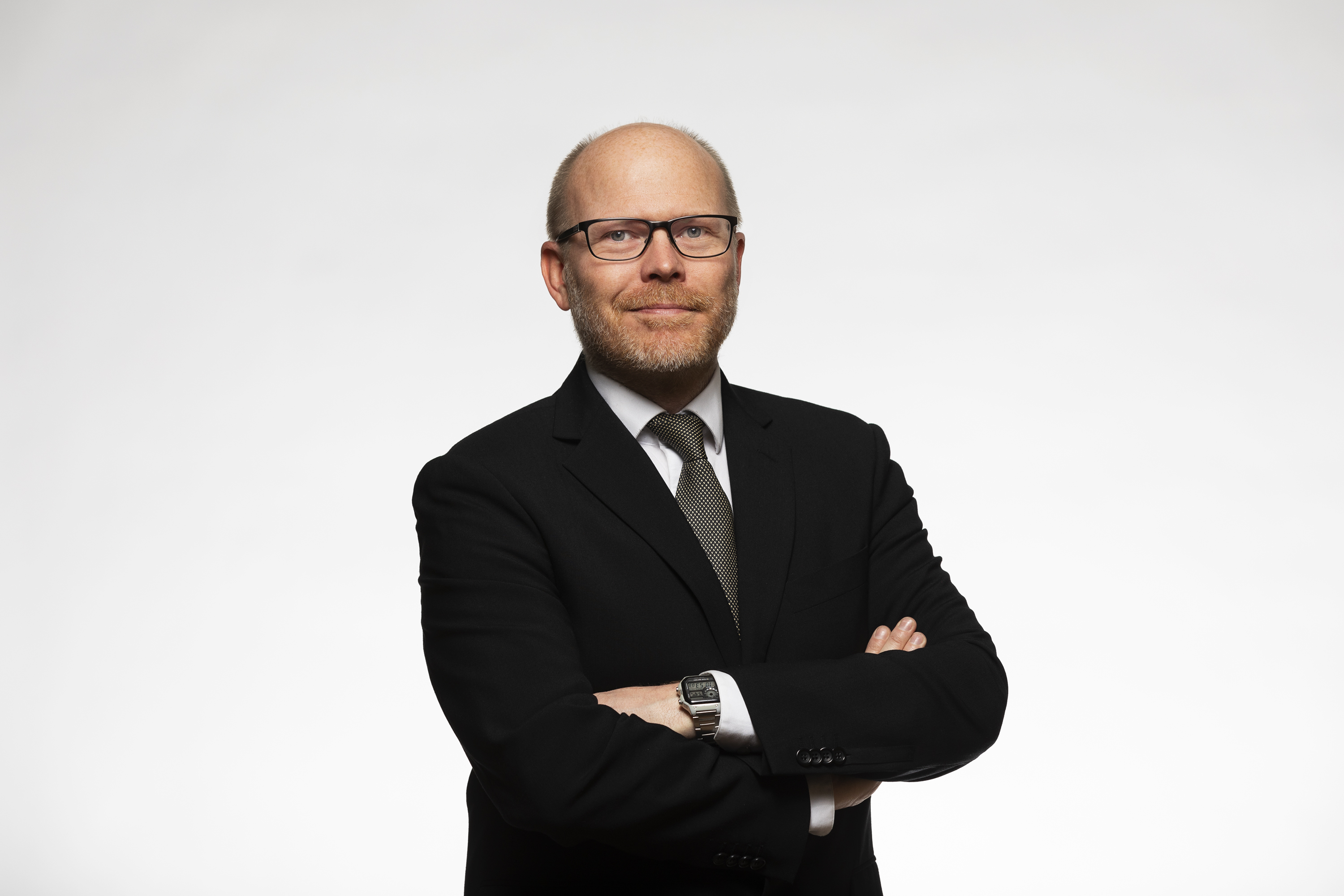
Fund manager
Erik Gunnarsson Experience in the fund industry 2006. Portfolio Manager since 1 November 2017.
|
|
||
|---|---|---|---|
|
The risk indicator provides guidance on the risk level for this product relative to other financial products. It shows the likelihood that the product will decrease in value due to market performance. Risk level 1 represents a low risk and risk level 7 is a high risk.
|

|
31.12.2025
|
||
|---|---|---|---|
|
The rating shows which funds have historically posted the strongest performance in relation to risk. Ratings are denoted by a scale of one to five stars, with five as the highest rating. A fund must have a performance history of at least three years to receive a rating.
Read more about the fund's rating |

|
|
||
|---|---|---|---|
|
This fund promotes environmental and social characteristics through its investments but does not have sustainable investments as its objective. As a result, the fund takes into consideration the environment and climate, as well as human rights, employees’ rights and corruption. The fund is reported as an Article 8 fund pursuant to EU regulation on sustainability-related disclosures in the financial services sector (SFDR). |

|
31.10.2025
|
|||
|---|---|---|---|
|
The sustainability rating is developed by the fund information company Morningstar. The rating measures how well the fund's investee companies manage sustainability risks relative to other funds within the same global Morningstar category. If the fund has invested in government bonds issued by sovereign states, the respective country's sustainability risk is included in the calculation. The analyzed funds can receive a sustainability rating between 1 and 5 globes, with 5 as the highest rating. The fund complies with the UN Principles for Responsible Investments. |


Graph
Performance
| Rate 06.02.2026 | 1 week | 1 month | 3 months | 2026 | 1 year | 5 years | 10 years |
|---|---|---|---|---|---|---|---|
| 145.88 SEK | 0.25% | 0.84% | 0.99% | 0.75% | 3.40% | 9.14% | 17.90% |
Portfolio 26.01.2026
Portfolio manager comments — Q4 2025
During the fourth and final quarter of the year, credit markets were characterized by continued strong risk sentiment, primarily driven by declining inflation expectations and increased clarity regarding central banks’ interest rate paths. The Riksbank, which cut rates in September, held policy rates unchanged during the quarter, as did the European Central Bank, in line with expectations, while the US Federal Reserve continued cutting rates in October and December.
Overall, this supported increased risk appetite across both investment grade and high yield credits, but also resulted in somewhat higher rate volatility as part of the expected future US rate cuts were priced out. In Sweden, expansionary fiscal policy, combined with the Riksbank’s rate path, is assessed to strengthen growth during the first half of 2026, while inflation is expected to bottom out, driven by base effects and a continued strengthening of the Swedish krona.
Interest rates showed somewhat higher volatility but rose overall during the quarter, with the repricing of the Federal Reserve toward the end of November contributing to higher yields also in Europe and Sweden. Yield curves continued to steepen, primarily due to forecasts of increased government bond supply in the coming years.
Credit spreads were generally stable and continued to tighten, with rising concerns regarding certain exposures in the private credit segment representing the main negative factor. Nordic credit spreads developed even more stably and tightened further, as the presence of private credit is very limited. Swedish real estate companies, which earlier in the year had been affected by rising vacancy rates, strengthened during the final quarter as vacancy levels now appear to have peaked, with forecasts pointing to declining vacancies.
The fund’s overweight to the Nordic banking and financial sector contributed significantly to performance, while the fund’s neutral duration weighed on returns as yields rose. Despite continued compressed spread levels, credits are still considered attractive, particularly within the investment grade segment. Focus remains on companies with strong balance sheets and low ESG risks, primarily in maturities of 4–5 years. Duration is maintained at a neutral level, with some tilt toward continued steepening of yield curves.
During the quarter, the fund invested in a number of new issues at attractive levels, including Munters, Arla, Tele2, Rikshem, Traton, Volvo, Hufvudstaden, Boliden, Swedavia, Industrivärden, SSAB, Aktia Bank, and Heba.
Portfolio distribution 31.12.2025
Geographic breakdown 31.12.2025